Digital Work Instructions & Operator Guidance
Step-by-step production guidance with clear station prompts, visual instructions and controlled progression through the defined process.
RoboMecs develops industrial software that brings production logic to the shop floor, guiding operators, enforcing sequence, coordinating equipment, recording results and making process information usable.
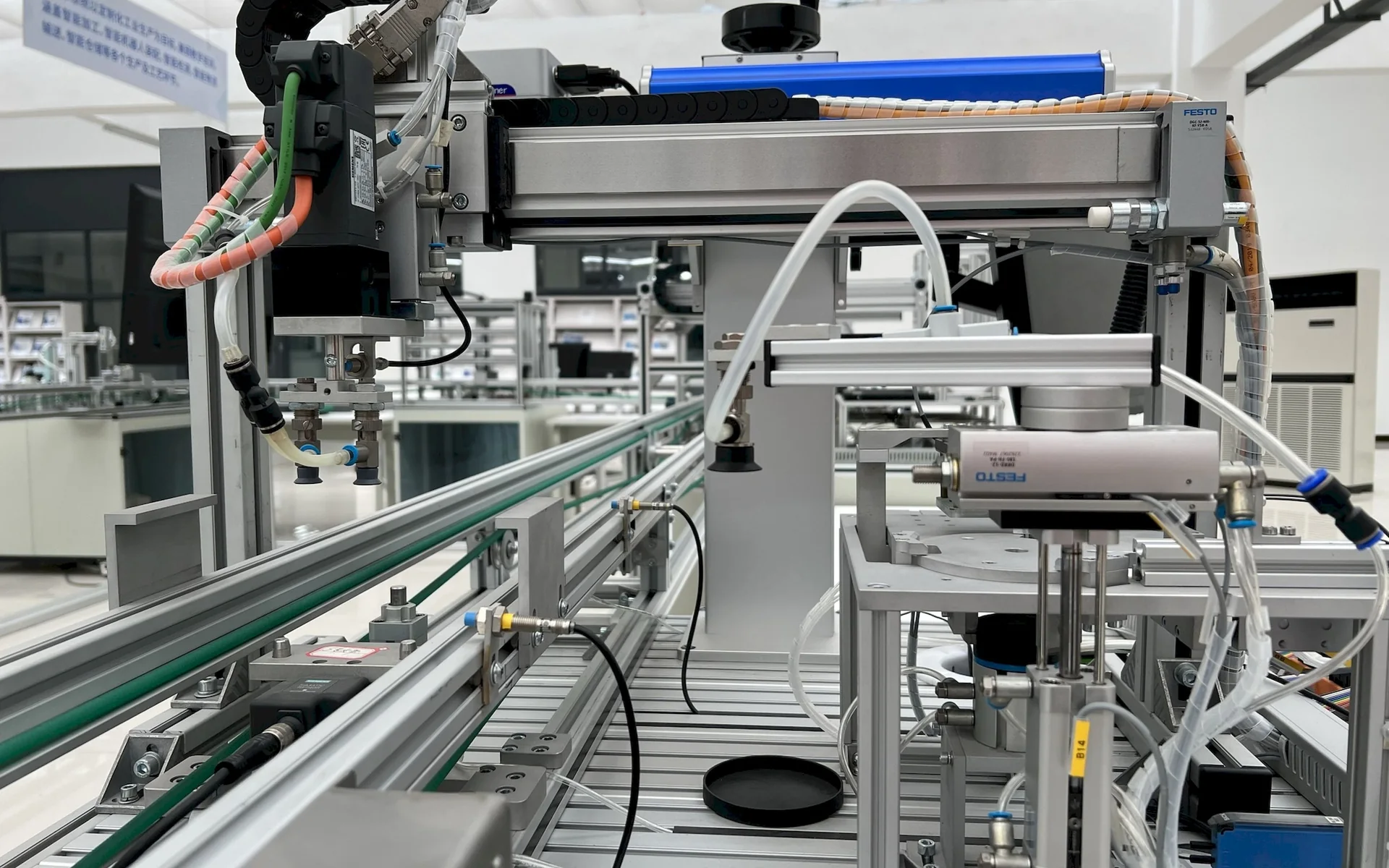
Our approach connects software with PLCs, machine vision, barcode or RFID devices and production equipment so digital workflows are tied to what physically happens at the station.
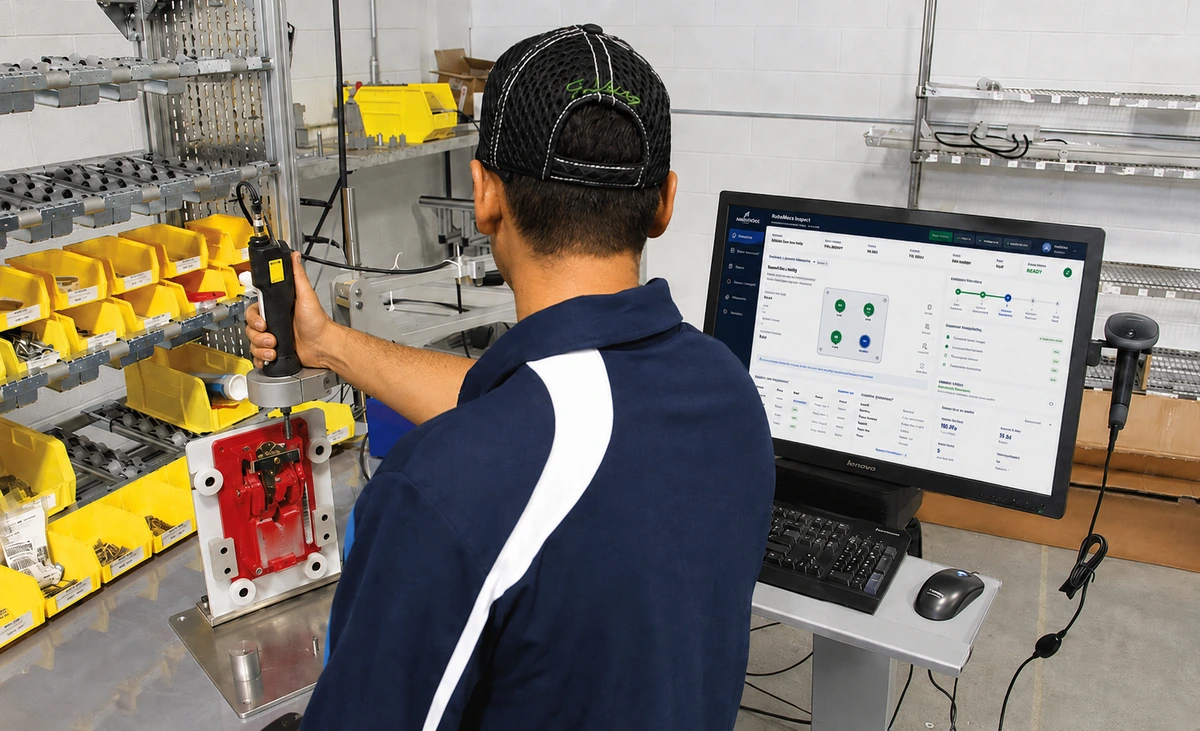
The software layer is designed around the station workflow and the evidence the process needs to create, operator actions, recipe state, component verification, inspections, equipment status and traceable production records.
Step-by-step production guidance with clear station prompts, visual instructions and controlled progression through the defined process.
Product or fixture-specific recipes used to load the correct sequence, instructions, checks and process parameters for each variant.
Workflow logic that prevents skipped or out-of-order assembly steps and coordinates confirmation from sensors, tools or control systems.
Integrated vision and verification results used within the production sequence to confirm required conditions before the process advances.
Structured history of process steps, identifiers, results, timestamps and relevant production events for review and accountability.
Interfaces to PLCs, cameras, barcode/RFID devices and future plant systems so production data can support broader visibility and improvement.
RoboMecs treats industrial software as part of the automation architecture. The operator application, PLC, machine vision and identification devices each perform the functions best suited to their role.
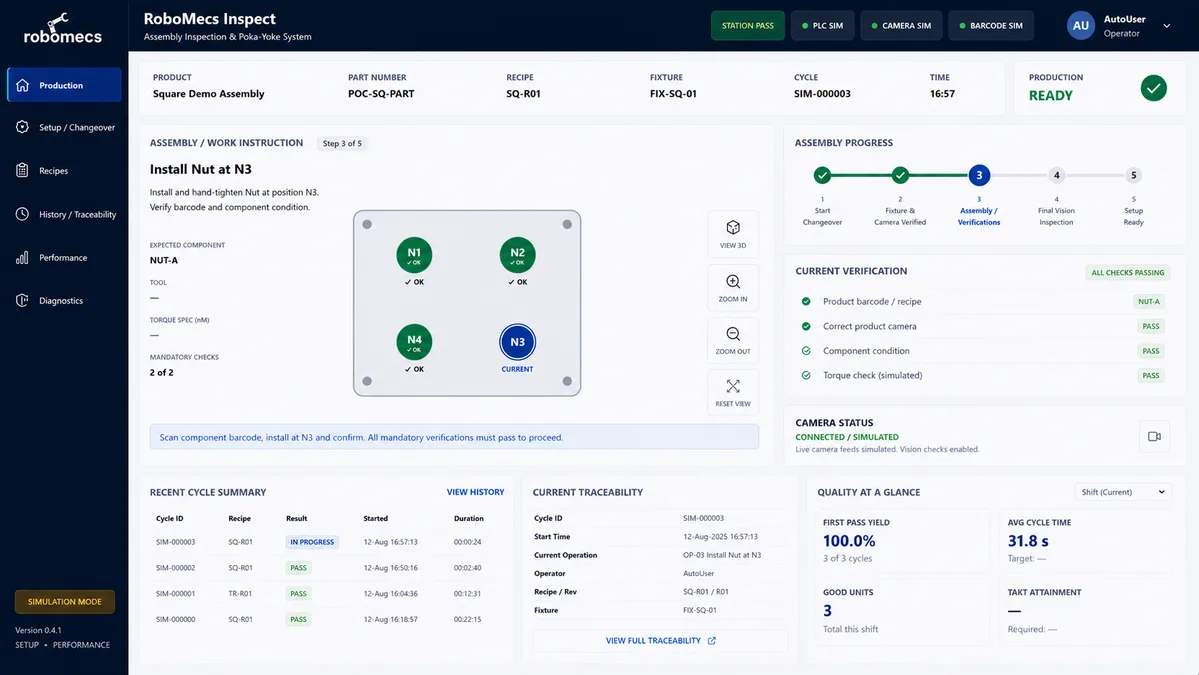
RoboMecs is developing a modular guided-assembly and inspection platform that combines operator guidance, recipe control, sequence enforcement, machine-vision verification and traceability, designed to expand from a single station to connected production workflows.
Production steps presented clearly at the station with controlled confirmation and immediate visibility of what must happen next.
PLC signals, sensors, camera results and barcode or RFID events used as process evidence rather than relying only on manual confirmation.
Structured records capture relevant product, process and inspection events so completed assemblies have an auditable station history.
Software and hardware interfaces organized so new recipes, stations, devices and production functions can be added as the application grows.