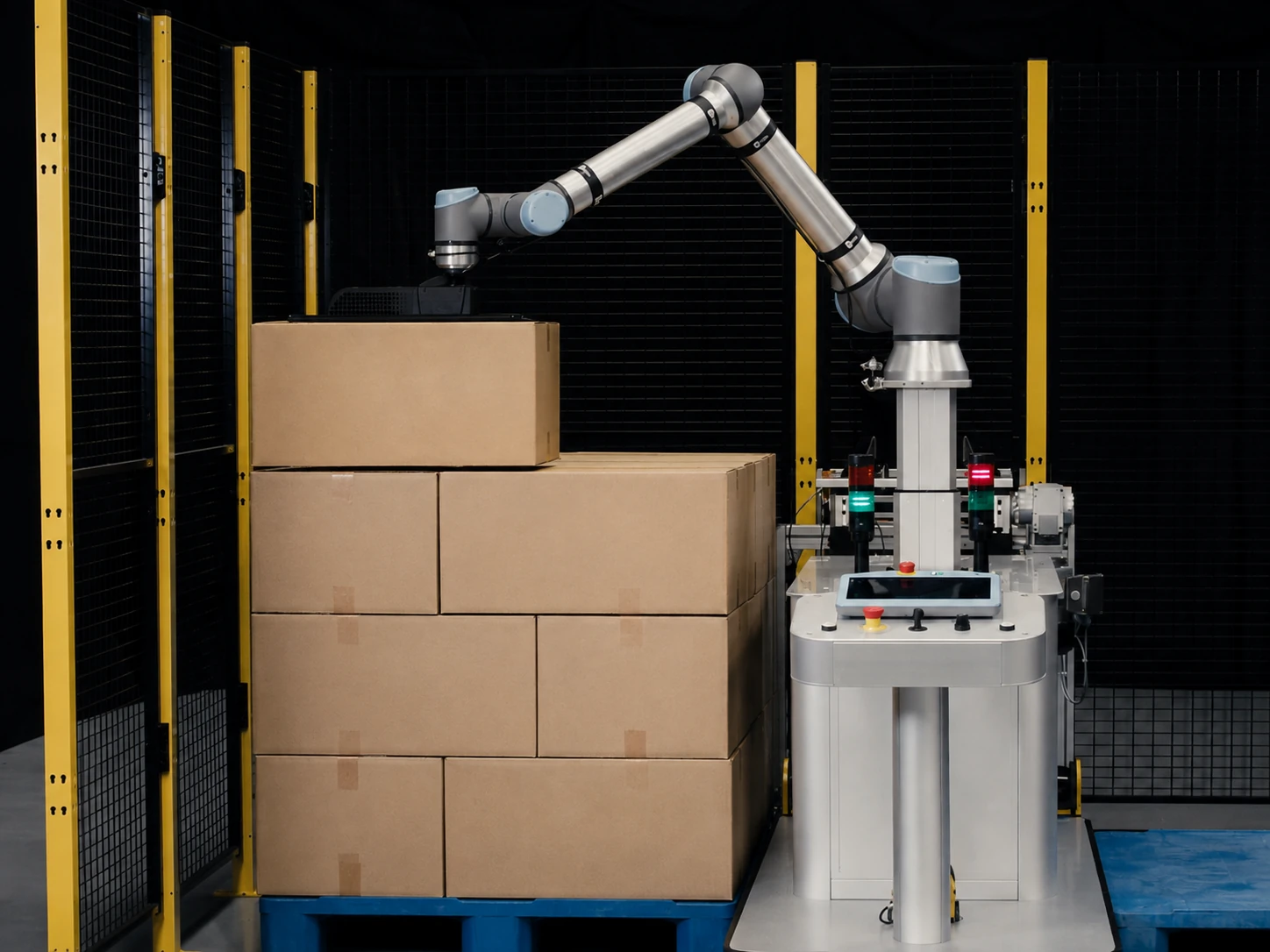
Palletizing is one of the most practical robotic applications in manufacturing, but robot selection should come after the application is defined. The correct system depends on product weight and geometry, pallet pattern, required rate, number of infeed lines, available space, gripper concept and future SKU changes.
1. Define the payload correctly
Robot payload must include the product, gripper, tooling, hoses, valves and any other mass carried by the wrist. Selecting a robot too close to its payload limit can restrict acceleration, reach and future tooling options.
2. Validate reach and pallet geometry
A robot that can technically reach the pallet may still have poor joint posture at some positions. Layout simulation should consider every pick and place point, pallet height, slip sheets, empty-pallet handling and access for operators and maintenance.
3. Calculate real cycle time
Cycle time is not the robot specification alone. It includes product arrival, pick confirmation, gripper actuation, travel, placement, pallet indexing and any waiting caused by conveyors or upstream equipment.
4. Engineer the EOAT around the product
- Vacuum tooling for suitable cartons, sheets and lightweight packs
- Mechanical gripping where surfaces are porous or geometry requires positive retention
- Fork or clamp concepts for bags and selected heavy loads
- Combination tooling when multiple product formats must be handled
- Sensors to confirm product presence and successful gripping
5. Consider pallet handling and conveyors
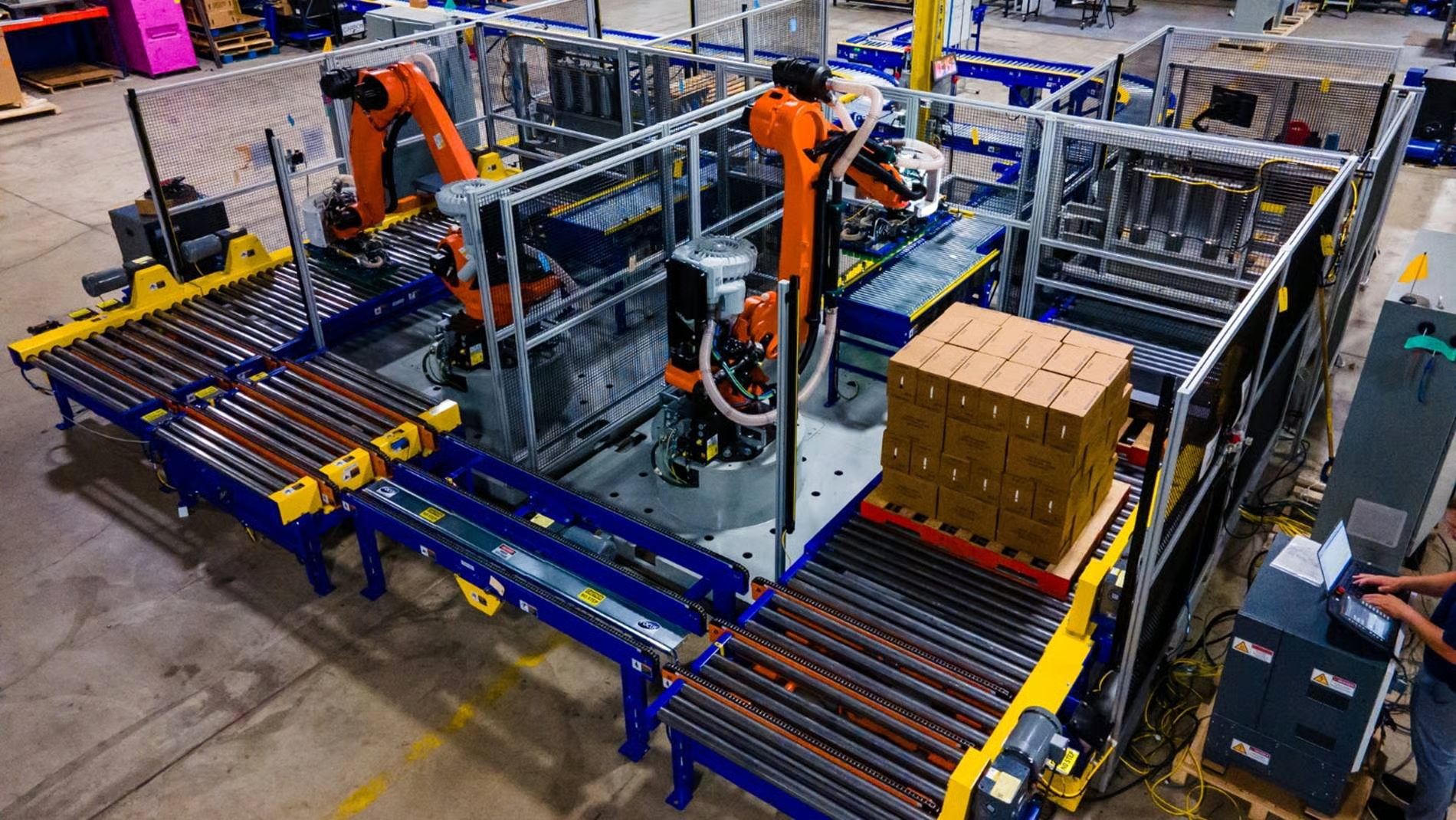
Many palletizing projects need more than a robot cell. Pallet dispensers, pallet conveyors, stretch wrapping, accumulation, slip-sheet handling, labels and forklift interfaces may all be part of the end-of-line process.
6. Design safety and access early
Guarding, interlocked doors, light curtains, scanners and safe operating modes should be designed with material flow and maintenance access. Safety added late often consumes more space and creates awkward operating procedures.
7. Plan for changeover and future SKUs
Recipe management should make it practical to change pallet patterns, products and line assignments without requiring a programmer for routine operations. The controls architecture should also leave room for future infeed lines or pallet destinations where justified.
RoboMecs palletizing integration
RoboMecs can engineer the complete palletizing cell including robot selection, EOAT, conveyors, pallet handling, mechanical fabrication, PLC/HMI control, safety, commissioning and operator handover. Send your product, pallet and throughput information for an initial application review.